Safety Compliance That Doesn't Annoy Construction Crews
Table of contents:
Construction sites move fast. Schedules tighten, subs rotate, deliveries stack up, and conditions change hour by hour. Supervisors need safety compliance to be consistent, but nobody wants monitoring that sparks friction with crews or slows down work for the wrong reasons.
The right security partner can support site safety expectations through compliance monitoring that stays respectful, calm, and documentation-focused. The goal is straightforward: reinforce OSHA expectations and site rules as part of a professional security presence, while keeping daily interactions smooth for the people doing the work.
Why safety and security are converging on job sites:
Many of the moments that shape safety outcomes happen at the same places where security already operates: the gate, the perimeter, high-traffic corridors, and controlled access areas. When security teams are trained to observe and reinforce site rules, you gain consistent coverage where non-compliance and hazards often appear first.
How a security team can support safety compliance on construction sites:
- PPE monitoring tied to site policy at entrances and controlled points
- Access control that helps keep unauthorized or untrained individuals out
- Hazard observations that flag issues early, before they escalate
- Clear reporting and documentation that supervisors can quickly act on
- Professional presence in key areas that supports a safer, more orderly site
This support is not about replacing the safety function or directing trade work. It is about consistent observation, respectful reinforcement of site rules, and reliable documentation.
Respectful Enforcement That Keeps the Site Moving
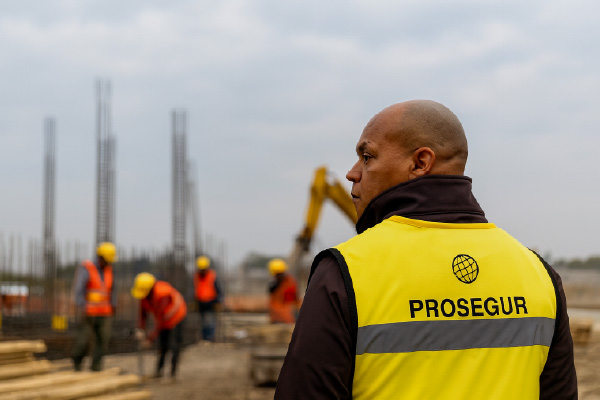
Crews tend to respond best to monitoring that feels consistent and professional, not personal or punitive. A well-trained security officer focuses on respectful enforcement techniques that reduce pushback and prevent minor issues from turning into distractions.
What respectful enforcement looks like in practice:
- Predictable standards: The same PPE expectations are reinforced consistently, regardless of who is walking in.
- Neutral language: The focus stays on the requirement, not the person.
- Fast corrections: Quick reminders and clear next steps instead of long lectures.
- Private, low-friction interactions: Corrections are handled quietly when possible to avoid unnecessary embarrassment.
- No debating: If a refusal occurs, the interaction stays calm, is documented objectively, and follows the site escalation path.
For supervisors, that typically means fewer conflicts landing at your door and fewer interruptions to the workday.
PPE Monitoring That Supports Crews Instead of Frustrating Them

Most PPE issues are not a character problem. They are usually a pace problem, a habit problem, or a supply problem. The right approach corrects the behavior with minimal disruption.
Security officers use clear, respectful prompts that keep things moving:
- “Quick PPE check before you head in.”
- “Site policy requires hardhat and high-vis beyond this point.”
- “If you need a vest, we can direct you to the approved pickup location.”
If someone refuses compliance, the process stays calm and consistent with site policy. The focus remains on access control, documentation, and notification, rather than confrontation.
How to Enforce Without Escalating
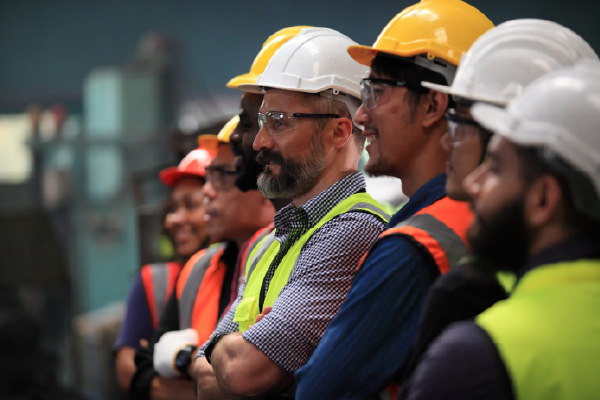
When enforcement turns into escalation, it becomes a time drain for supervisors and a morale drain for crews. Strong security teams rely on a repeatable approach that keeps interactions professional.
How trained officers reduce escalation risk:
- Keep it brief: short prompts, clear expectations, no lecturing
- Reference the site standard: policy-based language instead of personal judgment
- Offer a compliant next step: point to the approved way to correct the issue
- Stay calm and consistent: no sarcasm, no raised voices, no public call-outs
- Route and document instead of arguing: if refusal continues, document the facts and notify the site contact
This approach protects consistency without creating a scene.
Daily Hazard Observation That Supervisors Can Actually Use
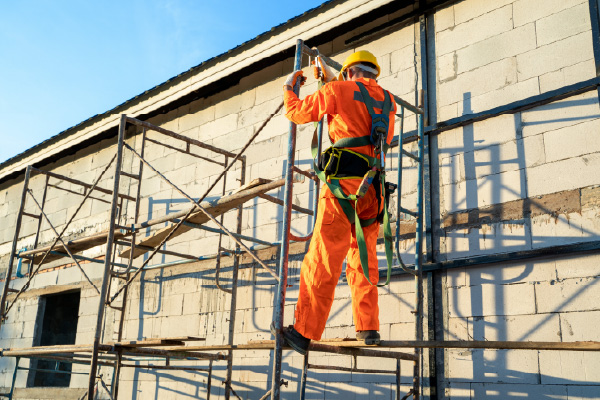
Supervisors do not need pages of vague notes. They need observations that are specific, location-based, and easy to act on. A security team can support that with a repeatable hazard observation routine focused on practical outcomes.
Common daily hazard observation categories:
- Access and perimeter: gates, badges, visitor control, fence integrity
- Zone PPE compliance: high-vis, hardhats, eye protection, hearing protection where posted
- Housekeeping and trip hazards: cords, debris, mud, rebar caps, blocked egress
- Barricades and signage: excavations, restricted areas, temporary barriers
- Lighting and visibility: early shifts, evenings, low-light corridors
- Traffic flow risks: pedestrian and equipment conflict points
Officers observe and report. They do not direct trade work. When something needs action, the issue is routed to the supervisor or safety lead through the established communication path.
Documentation Habits Supervisors Appreciate
Reliable documentation creates accountability without drama. It also supports supervisors by making patterns easier to spot and corrective action easier to track.
What makes documentation useful on a job site:
- Objective reporting: what was observed, without opinions or assumptions
- Time-stamped notes: clear date and time for every observation
- Location-specific details: gate, level, corridor, or zone
- Action recorded: what was done in the moment and who was notified
- Consistent format: easy to scan quickly, even on a busy day
Example of factual reporting style:
“Observed individual attempting to enter through Gate B at 6:42 AM without high-visibility vest. Entry was denied. Individual left the gate line at 6:44 AM. Site contact notified at 6:46 AM.”
This style stays professional, supports decision-making, and holds up if questions come later.
What This Means for Construction Site Supervisors
From a supervisor’s perspective, security-supported safety compliance monitoring is designed to reduce friction and increase consistency.
What supervisors gain with the right security support:
- More consistent site-rule reinforcement at key control points
- Fewer repeat issues slipping through the gate or spreading across the site
- Cleaner documentation that is easy to review and act on
- Earlier hazard visibility so issues can be addressed before they escalate
- A professional, respectful approach that helps protect site culture while supporting compliance
Learn more
If you are evaluating construction site security support that includes PPE and site-rule compliance monitoring through respectful enforcement, click here to learn more.
Stay updated with the latest security trends and analyses by following Prosegur's blog.