The First 5 Minutes: What Your Officers Do Matters More Than How Many You Have
Table of contents:
Picture this: A disturbance breaks out in your building lobby. It's 2:47 PM on a Tuesday, full occupancy, employees at their desks, visitors checked in at the front desk. You have 12 cameras in the building. Three officers are on shift. Within seconds, the situation begins to escalate.
Ninety seconds in. No one has acted.
Not because people weren't watching. Not because the cameras weren't recording. But because watching and being ready to respond are two very different things, and most organizations confuse the two.
The hard truth about security incidents is this: outcomes are almost entirely shaped by the first five minutes. What your people do, how quickly they recognize a threat, how clearly they're trained to decide and act, these factors matter far more than how many cameras are mounted on your walls or how many officers are standing post.
The average law enforcement response time in the U.S. is 7 to 11 minutes. In a developing incident, that window is everything. Your on-site security team is the first responder, whether they're prepared for that role or not.
The 5-Minute Window Is Real, and Most Organizations Aren't Ready for It
Security professionals and emergency response researchers consistently find that the trajectory of an incident, how bad it gets, how quickly it's controlled, and what damage occurs, is largely determined in the first few minutes.
In those minutes:
- A threat either escalates or gets contained
- Panic either spreads or gets managed
- Injuries either occur or get prevented
- Evidence either gets preserved or gets lost
- A minor situation either becomes a major incident or doesn't
Every minute of delay compounds risk. And in the absence of trained, empowered security personnel who know exactly what to do the moment something starts, those minutes are wasted.
This is why the question organizations should be asking isn't "do we have enough coverage?" It's "what does our coverage actually do when something happens?"
More Cameras Don't Make Faster Decisions
There's a common assumption in security planning that more surveillance equals more safety. It's understandable. Cameras are visible, scalable, and relatively affordable. Expanding your camera footprint feels like expanding your security posture.
But cameras, on their own, don't respond to incidents. They record them.
Surveillance footage is evidence after the fact. Without a trained professional monitoring it in real time, with both the authority and the judgment to act on what they see, cameras are witnesses, not deterrents. They capture what happened. They don't shape what happens.
The question isn't whether your cameras are recording. It's whether anyone is watching, and whether the person watching has the training, the authority, and the protocol to act in the next 60 seconds.
This is where AI-powered monitoring changes the equation. When video analytics are paired with a dedicated operations center staffed by trained professionals, like Prosegur's iSOC (Integrated Security Operations Center), surveillance stops being passive and becomes active. The technology flags anomalies; the human operator makes the call; the on-site guard executes. That's not more cameras. That's a fundamentally different capability.
One Trained Officer Outperforms Three Unprepared Ones
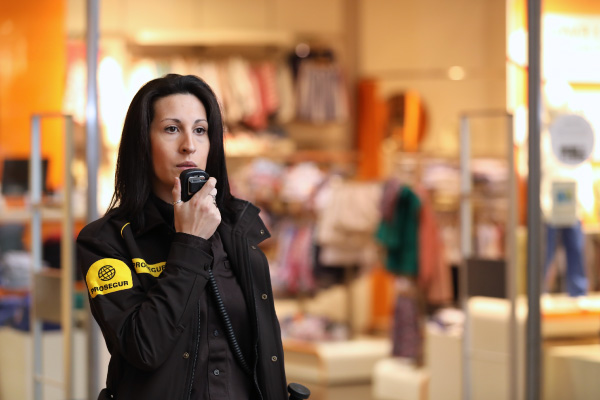
Headcount is one of the most misleading metrics in physical security. Organizations often expand their guard rosters in response to incidents or elevated risk, without addressing the underlying issue of what their security personnel are trained and empowered to do.
A well-trained, situationally aware security officer with clear protocols and practiced decision-making skills will consistently outperform multiple undertrained ones. The difference lies in:
- Situational awareness: Recognizing pre-incident indicators before a situation develops
- De-escalation skills: The ability to defuse tension before it becomes a physical incident
- Defined decision thresholds: Knowing precisely when to intervene, when to call for backup, and when to contact emergency services
- Communication clarity: The ability to relay accurate, actionable information under stress
- Post-incident protocol: Preserving scene integrity, documenting accurately, supporting investigations
These aren't soft skills. They're operational capabilities that directly determine incident outcomes, and they're the product of rigorous selection, training, and ongoing supervision. They're also exactly what separates a professional security partner from a staffing agency that places warm bodies at posts.
Technology's Role Is to Accelerate Human Response, Not Replace It
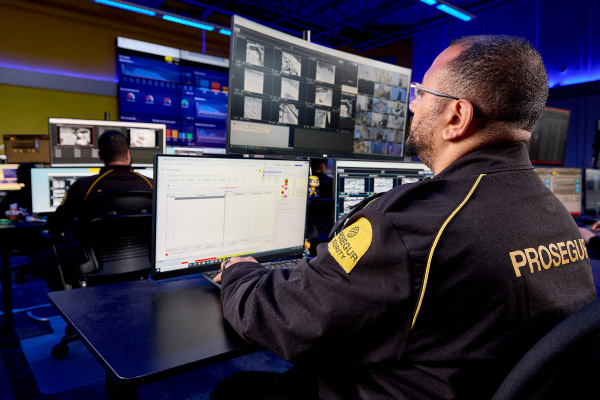
The security industry has seen an explosion of technology over the past decade: AI-powered video analytics, smart access control, biometric authentication, remote monitoring platforms, mobile surveillance units. All of it is genuinely valuable. None of it works without the human layer behind it.
The most effective security programs treat technology as a force multiplier for well-trained personnel, not a substitute for them. Here's what that looks like in practice:
Access control alerts notify a security officer of a badge anomaly, and that officer knows the protocol for investigating it
Video analytics flag unusual behavior in a monitored zone, and the operations center has a trained analyst who evaluates it within seconds
Intrusion detection triggers an alarm, and the response protocol is already mapped, practiced, and ready to execute
A mobile surveillance unit captures activity at a remote perimeter, and a human operator is watching that feed in real time
The common thread: technology creates the alert. A prepared human being acts on it. The gap between those two things is where incidents turn into crises, or get stopped before they become one.
Prosegur's Hybrid Security model is built precisely on this principle. By integrating expertly trained security officers with AI-powered monitoring, centralized iSOC operations, and integrated systems including access control, video, and intrusion detection, we create a response capability that is faster, smarter, and more consistent than any single element could be alone.
Ask Yourself This Question
Right now, in your facility, if an incident started in the next five minutes, what would actually happen?
Would your security team recognize the early indicators? Would they know exactly what to do? Would your technology be monitored by someone with the authority to act? Would the response be measured in seconds or minutes?
If the answers aren't clear, that gap is your real security risk. Not the number of cameras. Not the size of the guard force. The readiness and the quality of what happens in those first five minutes.
Stay updated with the latest security trends and analyses by following Prosegur's blog.