Built at AI Speed: Closing the Data Center Security Gap
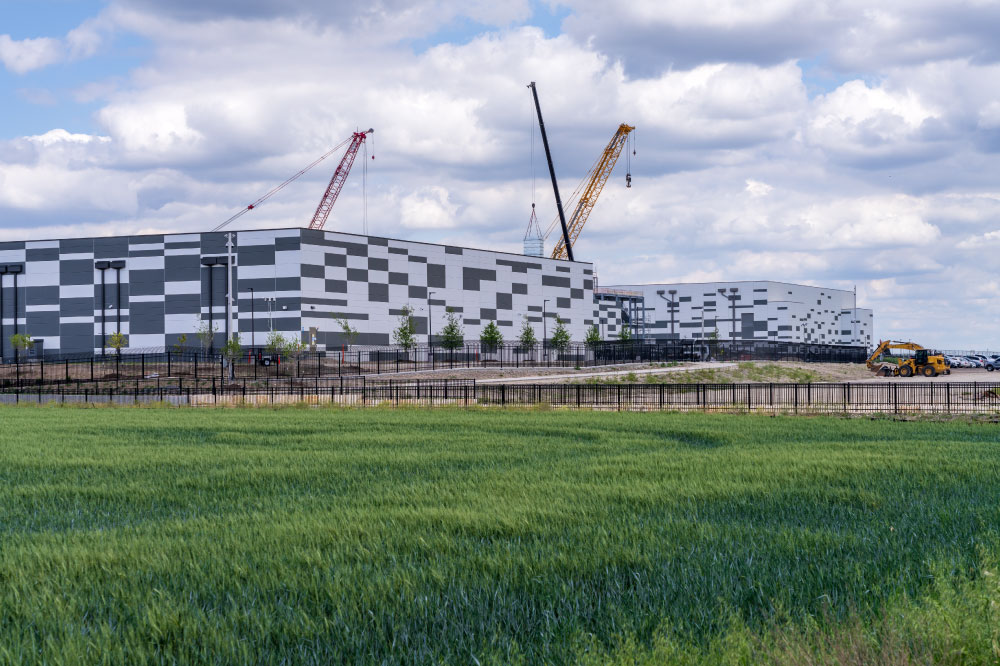
Table of contents:
The AI infrastructure boom is moving faster than the security frameworks built to protect it. Hyperscale data centers are being approved, funded, and built on timelines that have outrun traditional physical security planning, and threat actors have noticed.
For Prosegur, this is not a forecast. Over the past 18 months, multiple major data center developers and operators have engaged Prosegur Global Risk Services (GRS) to assess their facilities, test their defenses, and protect their executives in front of the communities where they plan to build. The industry knows it has a gap, and the leaders are moving to close it.
The challenge: speed of build, lag in security design
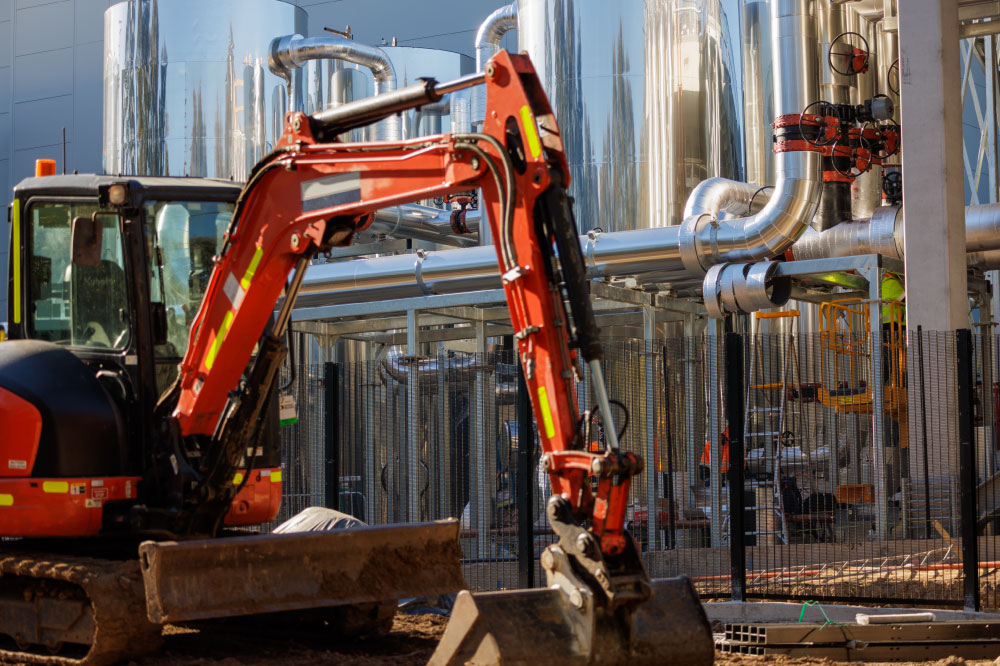
Global demand for AI compute is compressing data center timelines. Projects move from site selection to groundbreaking faster than security programs can be scoped, budgeted, and staffed. That pressure shows up in two places.
In the community. Municipal forums, zoning hearings, and public engagement sessions have become the first visible battleground for new campuses. They draw concerned residents, but also organized activists, competitors, and in some cases foreign influence operations. The person at the podium is often a senior executive with a real public profile.
Behind the fence line. New campuses often lack the security benchmarks that financial institutions, defense contractors, and pharmaceutical companies have refined over decades. Developers and operators are frequently starting from a blank page, while power, fiber, and construction crews are already on site.
A physical security program cannot be retrofitted into a billion-dollar infrastructure asset. It has to be engineered in, and that process starts with an honest assessment of what you don't know
What we're seeing in the field

Data center-sector inquiries to GRS have risen sharply over the past 18 months. Multiple major players have engaged us for three kinds of work: Security Vulnerability and Risk Assessments (SVRAs), physical penetration tests of their data centers, and protective agents for the community forums where their executives discuss proposed new construction.
The common thread is timing. The most valuable engagements happen before a site goes live or a hearing date arrives, when findings can still shape design, staffing, and budget. Fixing a gap after an incident always costs more than finding it first.
Four GRS services the data center industry is asking for

Security Vulnerability and Risk Assessment (SVRA)
An SVRA is a systematic, evidence-based evaluation of a facility's physical security posture. GRS examines access control, perimeter integrity, detection systems, procedural compliance, and insider threat exposure. The result is a prioritized gap analysis that operators can act on immediately and use to anchor capital planning.
For a greenfield campus, an SVRA informs design before concrete is poured. For an existing facility, it shows leadership where risk is concentrated and what it will take to reduce it.
Physical security penetration testing
Penetration testing simulates what a motivated adversary would actually try: tailgating, social engineering, credential exploitation, and perimeter breach attempts. Unlike a compliance audit, it validates whether controls stop a real person, not whether they exist on paper. GRS presents findings with scenario-based risk framing, so leaders see the consequence of each gap rather than a checklist.
Protective agents for community and public forums
As opposition to large AI infrastructure projects intensifies, public appearances carry elevated personal risk for developers, operators, and senior staff. GRS provides discreet, professional protective coverage calibrated to the venue, the audience, and the threat picture. Executives can engage the community openly, and the conversation stays on the project.
Threat intelligence and advance work
GRS analysts collect pre-event intelligence and assess venues to identify threat actors, organized opposition, or coordinated disruption before it reaches the forum floor. The output is actionable intelligence, not noise, timed to decision-making cycles rather than news cycles.
The community forum is the new front line
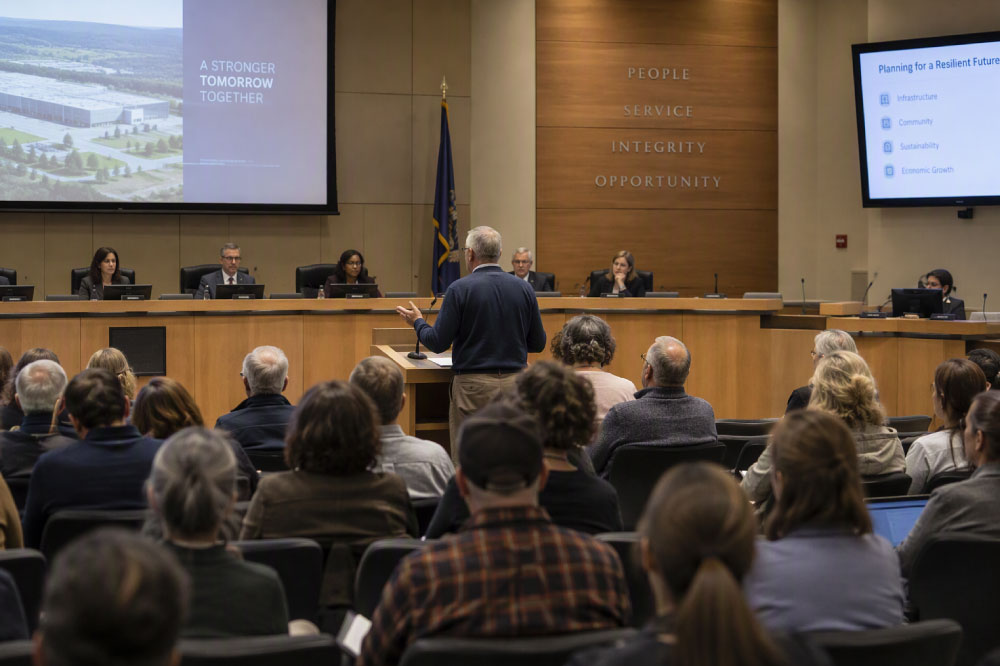
For many data center projects, the most exposed moment is not an intrusion attempt at the fence. It is a two-hour public meeting in a council chamber or school auditorium, where an executive explains the project to a room that may include organized opposition.
These events are public by design, announced weeks in advance, and often livestreamed. That makes them predictable for anyone who wants to disrupt them, and good protective planning turns that same predictability into an advantage.
A typical GRS forum engagement follows four steps:
- Advance intelligence. Monitor open sources and online channels for organized opposition, planned protests, and threats against the company or its people.
- Venue assessment. Walk the site, map entry points and egress routes, and coordinate with venue staff and local law enforcement.
- Event-day coverage. Deploy protective agents with a low-profile posture that fits the tone of a community meeting.
- After-action review. Capture what was observed so the next forum on the calendar starts with better information.
Done well, protection is nearly invisible. The community sees an accessible executive, and the company keeps the conversation focused on the project.
Five questions every data center operator should be asking
If you build, buy, or operate data center capacity, these five questions will show quickly where your security program stands.
- When was our last independent physical security assessment, and did it test our controls or only document them?
- Has anyone tried to get into our facility the way a real intruder would?
- Who is responsible for executive safety at our next community forum, and what do they know about who is coming?
- Do our guard force, security technology, and risk advisors share findings, or does each work from its own report?
- Is security in the design budget for our next campus, or is it planned as a later add-on?
Build security at the speed of the build
The AI infrastructure race is not slowing down. The security programs protecting it need to be built with the same urgency and precision as the assets themselves.
Whether you are breaking ground on a greenfield campus, hardening an existing facility, or preparing for a contested public hearing, Prosegur brings a single integrated program rather than a collection of contracts.
Is your data center program ready for what's next? Contact Global Risk Services to discuss an SVRA, a physical penetration test, or a protective operations engagement.
Stay updated with the latest security trends and analyses by following Prosegur's blog.