Holiday Retail Security 2026: Your Black Friday Guide
Table of contents:
- Shoplifting is down. Here's what's rising instead
- Black Friday security: crowds, exits and walkout theft
- Gift card fraud, loyalty fraud and phone scams at the register
- Back-of-house security: receiving, stockrooms and cargo
- Protecting seasonal associates from aggression and violence
- Why reporting every incident matters
- How Prosegur helps retailers secure the holiday season
Holiday retail security looks different in 2026. The good news: shoplifting is finally falling. Shoplifting incidents dropped 12.4% in 2025, according to the National Retail Federation’s (NRF) Impact of Retail Theft & Violence 2026 report.
The catch: retail crime didn’t go away. It changed shape. The same retailers reported rising phone scams, loyalty and gift card fraud, repeat offenders, organized retail crime and brazen walkout thefts.
And it’s arriving during what NRF forecasts will be the first $1 trillion holiday season, up 4.2% from last year. Retailers are hiring cautiously: 325,000 to 375,000 seasonal workers, roughly in line with last year’s 356,000. That means more shoppers, transactions and inventory, handled by lean teams of newer associates.
Guarding the front door isn’t enough anymore. Below, Prosegur’s retail security team breaks down where the risk has moved and what to put in place before Black Friday on November 27 to protect your people, inventory and margins.
Shoplifting is down. Here's what's rising instead
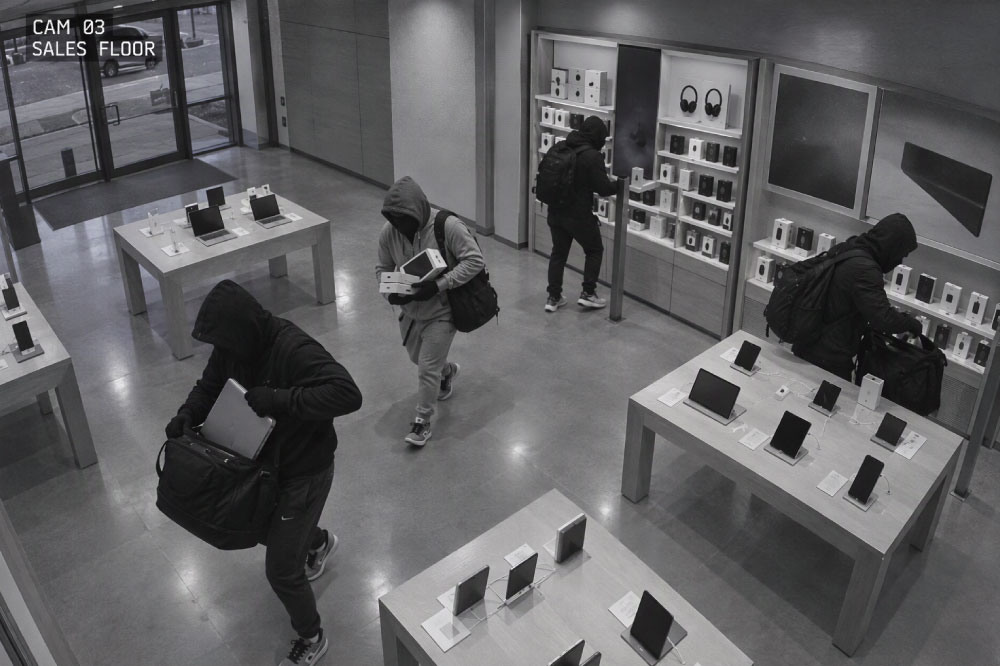
NRF credits the drop in shoplifting to retailers' investments in technology and employee training. But offenders have adapted, and the losses that remain are harder to see on a camera feed:
- Fraud and scams. Phone scams, loyalty-points fraud and gift card schemes target your registers, call lines and customer accounts rather than your shelves. New seasonal associates are the easiest marks.
- Repeat and organized offenders. More retailers are seeing the same offenders return. Many work in crews, scout stores in advance and come back to the ones that didn't stop them.
- Walkout and pushout theft. Someone fills a cart and walks out without paying, betting that no one will intervene.
Organized retail crime (ORC) is also a national enforcement priority. In August, NRF and law enforcement partners ran a nine-day National Organized Retail Crime Blitz across 32 states. It produced more than 1,900 apprehensions and arrests and took eight weapons off the street. The Combating Organized Retail Crime Act passed the House in May and is waiting on a Senate vote.
Black Friday security: crowds, exits and walkout theft
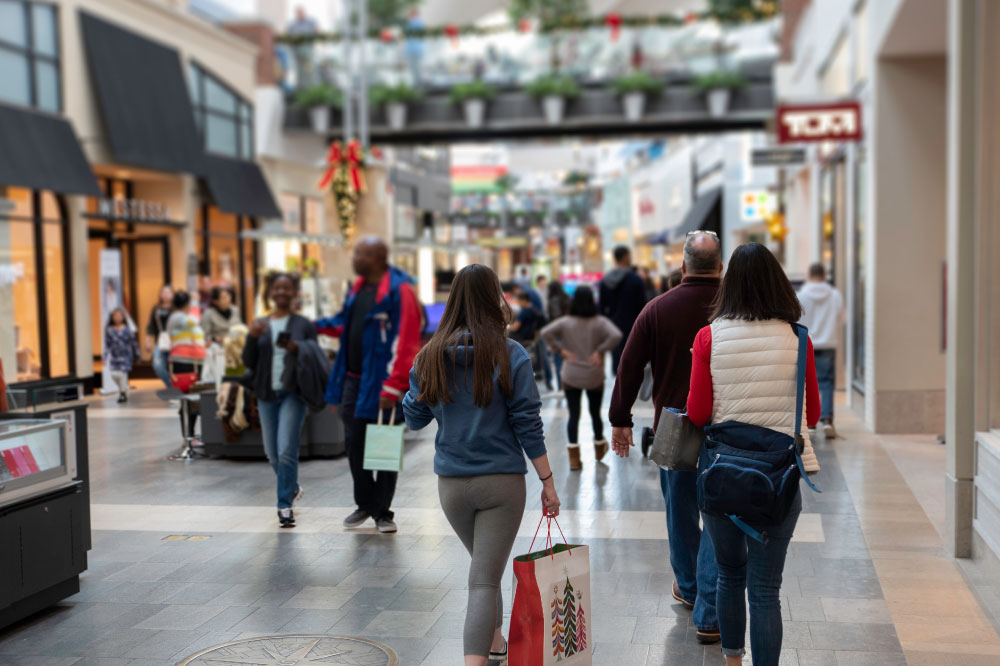
Black Friday (November 27), Small Business Saturday (November 28) and Cyber Monday pickups (November 30) bring some of the biggest crowds of the year. Crowds create cover. Walkout crews and organized boosters count on busy associates who won't notice, or won't intervene.
How to tighten up the sales floor for the weekend:
- Put a visible, trained presence at entrances and exits. Uniformed security officers who greet shoppers make walkout and pushout theft harder to attempt unnoticed, and they reassure honest customers at the same time.
- Write your crowd plan before the doors open. Set queue lines, entry and exit points, door-buster staging areas, a radio channel and who has authority to pause entry if the crowd gets unsafe.
- Set a clear intervention policy. Associates should know exactly what to do, and what not to do, when they see a theft in progress. Observe, report and document protects people and builds better cases than a chase.
- Guard high-value zones. Staff electronics, fragrance, apparel and other hot categories. Restock locked displays more often instead of overloading the floor.
- Extend coverage to the parking lot. Lots are where shoppers get targeted and where crews stage. Mobile surveillance units, good lighting and closing-time escorts for staff close that gap.
- Monitor what your team can't watch. Remote video monitoring lets trained operators spot suspicious activity across stores and lots in real time and dispatch help.
Gift card fraud, loyalty fraud and phone scams at the register
The most widely reported increases in NRF's survey don't involve anyone walking out with merchandise. They target your people and your systems, and they spike when stores are busiest and staff are newest.
- Phone scams. A caller poses as a district manager, corporate IT or a vendor and pressures an associate to load gift cards, share a code or move cash "to fix a problem." Defense: a firm rule that no one acts on phone instructions without calling back a known number, taught on a seasonal hire's first day.
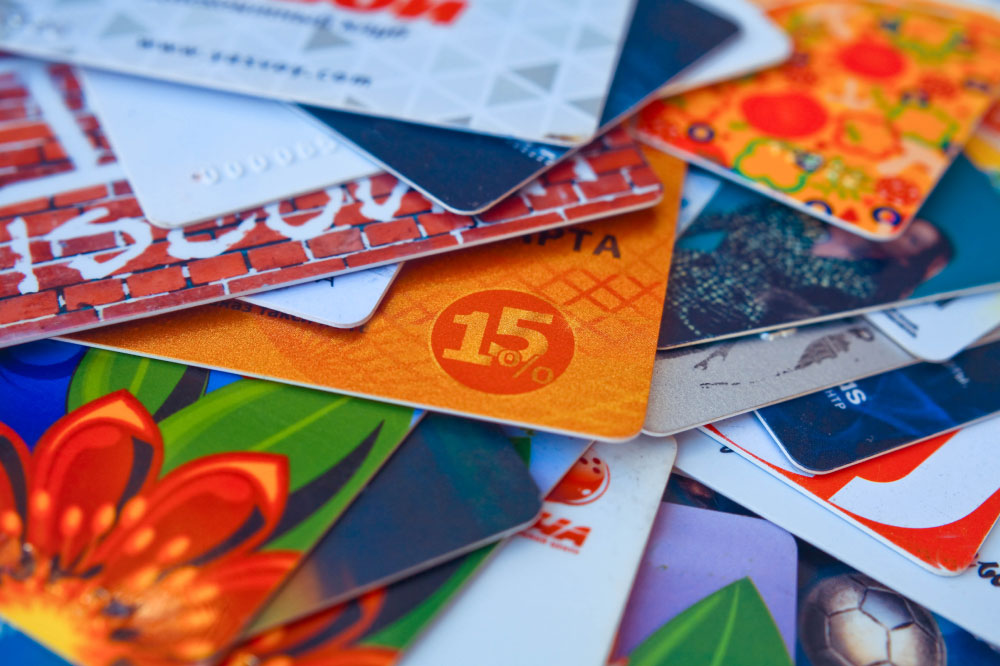
- Gift card fraud. Criminals tamper with cards on the rack, record the numbers and drain them once a shopper activates them. Others coach victims by phone to buy cards in bulk. Defense: keep card racks in view of a register, check packaging, and train cashiers to flag large or repeated card purchases, especially when the buyer is on the phone.
- Loyalty fraud. Stolen logins let fraudsters drain points or redeem rewards in store. Defense: multi-factor authentication, alerts on unusual redemptions and ID checks on high-value redemptions.
Many of these schemes start with a phishing email or a compromised account, so physical and cybersecurity teams should share what they're seeing during the season.
Back-of-house security: receiving, stockrooms and cargo
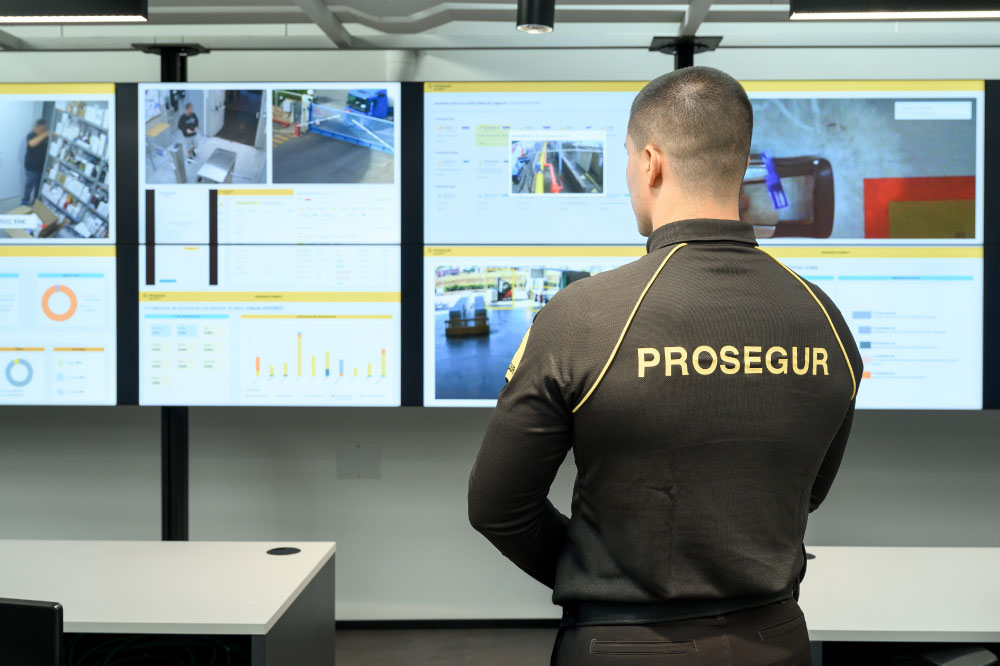
While the sales floor gets the attention, the loading dock is where losses are climbing. Estimated U.S. and Canadian cargo theft losses more than doubled to $304.6 million in the second quarter of 2026, even as the number of incidents fell 26%, according to Videoloft and Verisk CargoNet data. Fewer thefts, bigger hauls: criminals are choosing targets more carefully.
The holidays are a known peak. Over the past five years, CargoNet logged 353 cargo thefts, attempts and fraud events between December 23 and January 2, and nearly 7 in 10 fell in the week ending December 29. TVs, computers, alcohol, tools, footwear and appliances are favorite holiday targets.
Where stores and distribution sites are exposed:
- Fraudulent pickups and redirected loads. Criminals phish carrier systems, then show up as the "new" driver. Verify every unexpected change in driver, carrier or pickup time through a second channel, as the FBI recommends.
- Unattended trailers and docks. Loaded trailers left onsite over a holiday closure are easy targets. Pair intrusion detection with live remote monitoring so someone responds the moment a perimeter is crossed.
- Open stockrooms. Seasonal hiring means more people with back-room access. Use access control and video surveillance on stockroom and receiving doors, alarm propped doors, and run extra cycle counts on high-value items.
Protecting seasonal associates from aggression and violence
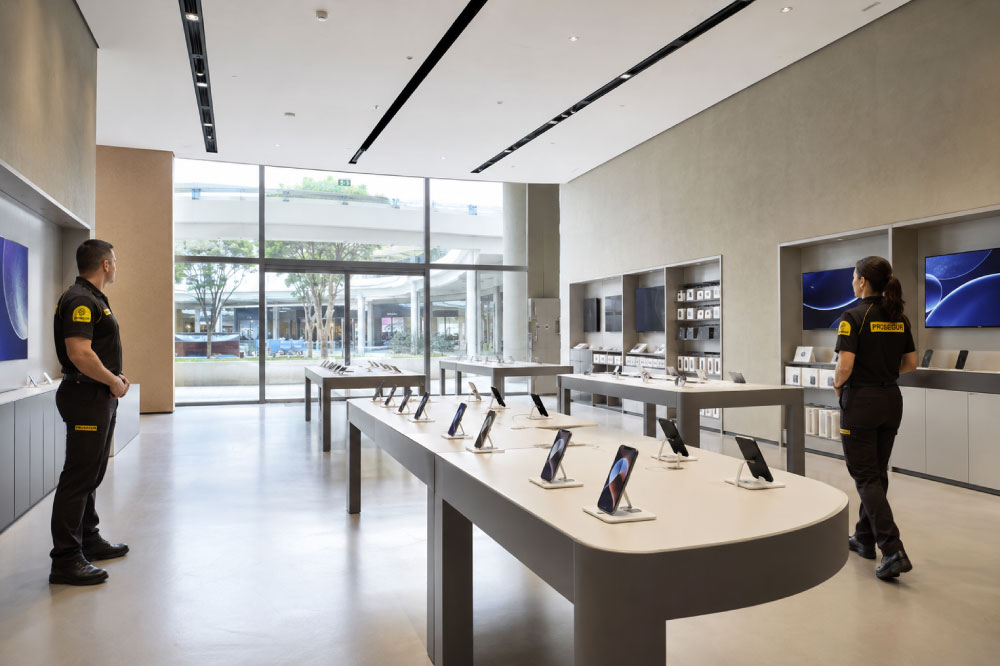
Your seasonal hires are your front line, and many will start work days before Black Friday. Retailers in NRF's survey reported more guest-related incidents and disruptions. In response, 72% are investing in management training on workplace violence prevention, 65% in employee training and 61% in risk-intelligence technology.
A practical plan for the season:
- Train on day one, not week three. Every new associate should know the intervention policy, how to spot a phone or gift card scam, how to de-escalate an angry customer and how to call for help.
- Make help easy to reach. Panic buttons or mobile duress alerts connected to on-site security or a monitoring center cut response time when a situation escalates.
- Use officers trained in de-escalation. A calm, professional officer can defuse a dispute over a door-buster before it turns physical.
- Plan for emergencies in a crowd. Rehearse evacuation routes, medical response and lockdown procedures with full holiday staffing levels in mind.
- Protect closing time. Use a buddy system for the last shift, escorts to cars and secure procedures for cash pickups and deposits.
Associates who feel safe are more likely to stay through the season, which matters when every open shift is hard to fill.
Why reporting every incident matters
Much of retail theft never reaches the police. NRF found that 63% of retailers report fewer than half of their store theft incidents to law enforcement. The top reasons: losses too small to meet felony thresholds (60%) and doubts about police follow-through (54%).
That's a problem, because organized crews are caught by connecting many small incidents across stores and jurisdictions. The August ORC blitz worked because 40 retail brands and 84 law enforcement agencies shared information.
Before the season starts:
- Document everything. Log every incident with time, location, video, descriptions and value, even when you don't expect an arrest.
- Preserve video fast. Holiday footage gets overwritten quickly. Set retention long enough to build a case.
- Meet your local precinct now. Agree on how and when to report, and connect with your regional ORC association if one exists.
- Ask your security partner for case-ready reports. Consistent, detailed incident reports make it easier for police and prosecutors to tie offenders to a pattern.
How Prosegur helps retailers secure the holiday season
Prosegur has protected businesses for 50 years, with 180,000 security professionals in 36 countries. Our retail security services cover everything from single locations to national chains, including grocery, big box, shopping centers, specialty and convenience stores.
For the 2026 holiday season, we help retailers:
- Add coverage for peak days with national contingency services that scale officers up for Black Friday weekend and the final shopping days before Christmas.
- Deter theft and protect associates with uniformed security officers trained in loss prevention, customer service, de-escalation, emergency response and legal standards.
- Watch every store, lot and dock around the clock through remote security services run from our iSOC, plus mobile surveillance units for parking lots.
- Combine people and technology with hybrid security programs that pair on-site officers with video, access control and intrusion detection.
- Close the cyber gap behind phone scams, phishing and account takeover with Prosegur Cybersecurity.
Get ready before Black Friday. Request a free site security assessment or call (800) 405-1832 to talk with a retail security expert.
Stay updated with the latest security trends and analyses by following Prosegur's blog.
Sources
- National Retail Federation, "NRF Forecasts 2026 Holiday Sales Growth as Consumers Remain Resilient", October 15, 2026
- National Retail Federation, "Retailers See Fraud Schemes Evolve as Shoplifting Declines, NRF Study Finds", July 30, 2026
- National Retail Federation, "National Organized Retail Crime Crackdown Leads to More Than 1,900 Apprehensions and Arrests", September 17, 2026
- Stacker via KRDO, "Cargo theft losses have more than doubled ahead of the holiday rush", October 13, 2026
-
Holiday Retail Security 2026: Your Black Friday Guide
November 24, 2026
-

Built at AI Speed: Closing the Data Center Security Gap
October 20, 2026